
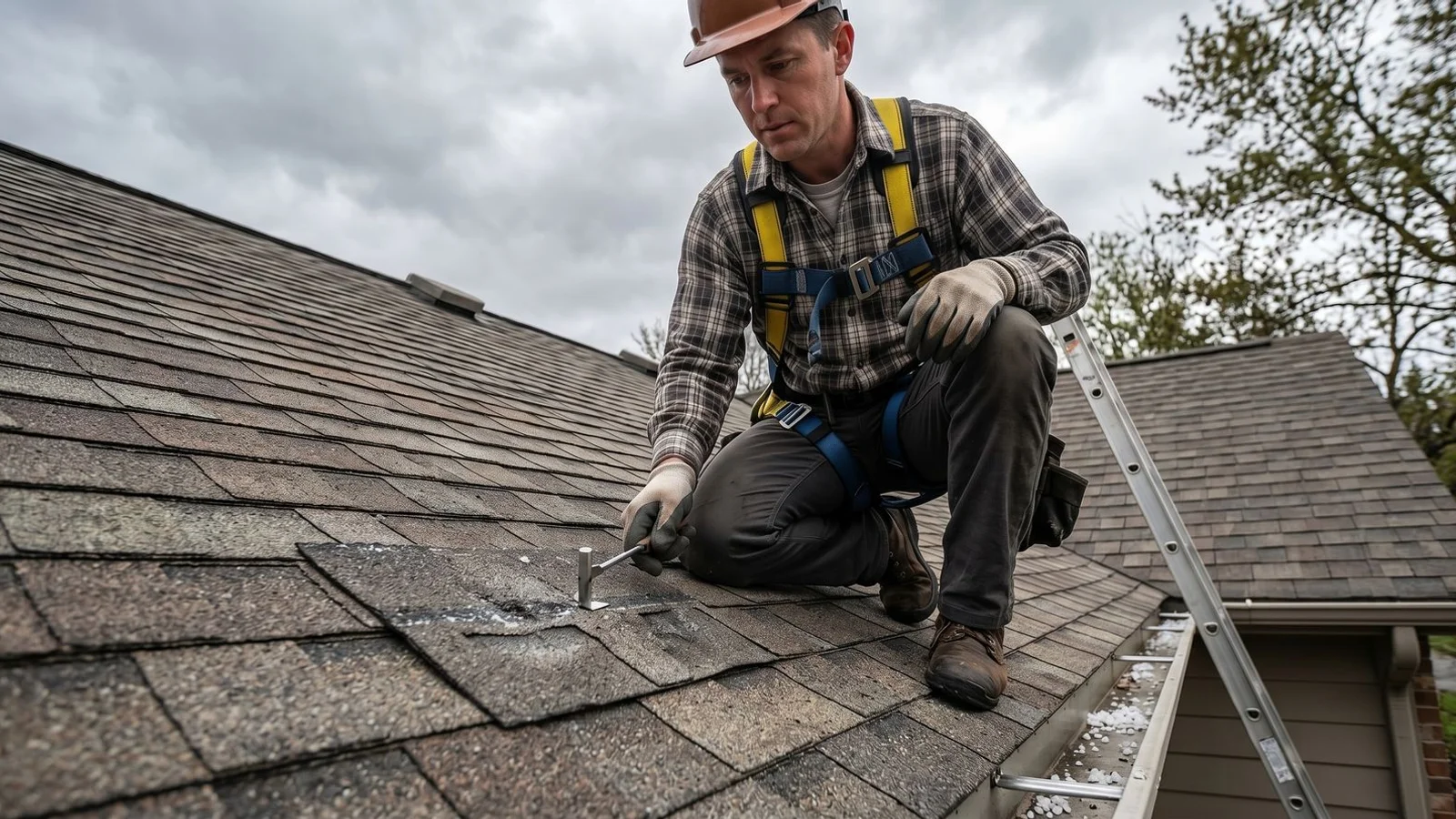
You know how the neighborhood looks the morning after a severe storm drops two-inch hail on your property. That sudden surge of out-of-town contractors knocking on doors can feel overwhelming.
Our team has watched these temporary crews flood US markets, but the most reliable help usually comes from the companies already at the top of local search results. State Farm reported paying out over $5.6 billion in hail claims across the US in 2025 alone. This massive figure explains why so many out-of-state operations chase these storms.
We want to pull back the curtain on the tactics required to rank after hailstorm roofer inquiries spike online. Understanding this process helps you spot the difference between a deeply rooted local expert and a fly-by-night operation.
Let’s look at the data, what it tells us about contractor visibility, and how you can use this knowledge to make a safe hiring decision.
The Two-Layer Strategy
Ranking #1 after a hailstorm requires two things: building sustained online authority months before the weather turns, and executing a rapid response plan the day the damage occurs. Our strategy focuses on this exact combination to ensure property owners find real professionals instead of door-to-door opportunists.
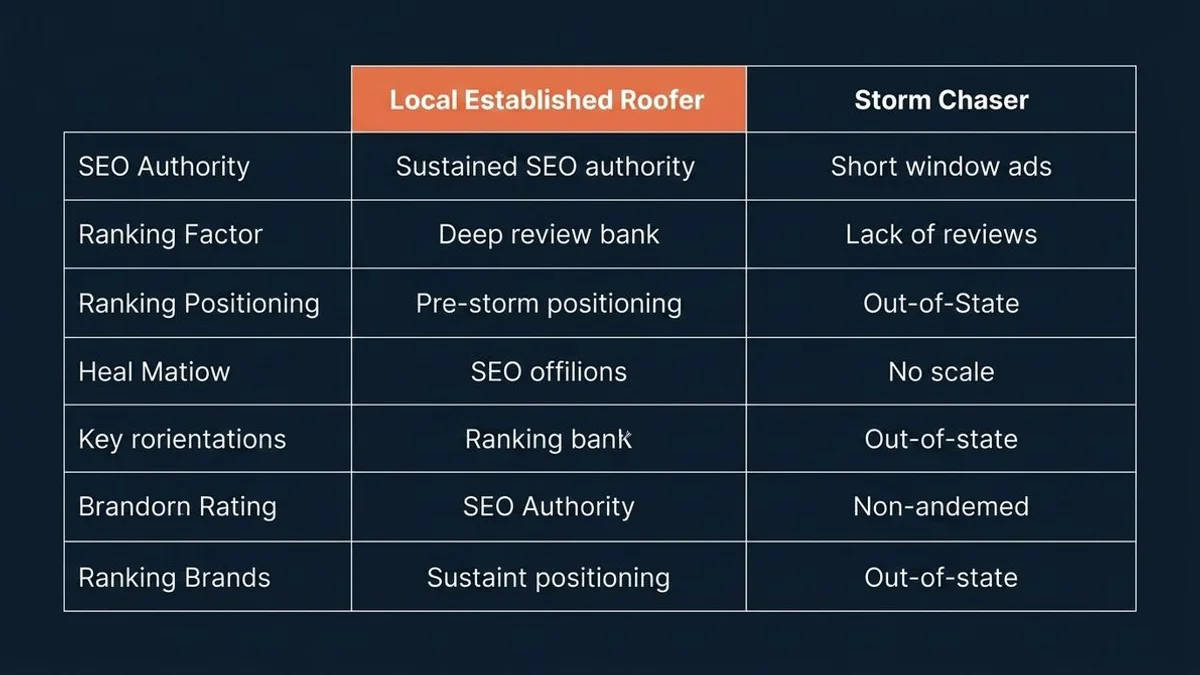
Storm chasers rely on speed and volume to secure jobs. These groups deploy heavy paid social ads and pitch hundreds of homes in a matter of hours. Local contractors compete on tenure, verified trust, and Google Map Pack placement. This local authority has to be fully established long before the clouds darken.
A 2026 report from Cotality showed that hailstones two inches or larger struck more than 600,000 US homes in 2025 alone. That level of destruction creates a frantic environment for homeowners needing immediate help.
We see a clear distinction in how different contractors approach this demand spike.
- Storm Chasers: Focus on immediate, high-pressure, door-to-door sales tactics.
- Local Experts: Rely on a long history of verified Google Business Profile reviews.
- The SEO Difference: Established companies appear naturally when you search for emergency repairs.
Pre-Storm Positioning (March-May)
The critical pre-storm preparation window runs from March through May across the US. Executing proper hailstorm roofing seo during these spring months dictates exactly who shows up first when summer hail hits.
We guide contractors to focus on four foundational pillars during this quiet period. Setting up these elements early ensures their business is fully visible to homeowners facing an unexpected $4,250 average repair bill later in the year.
GBP foundation. Your local roofer must maintain a primary category of “Roofing contractor” to show up in maps. Their services list should explicitly include terms like “Hail damage inspection” and “Storm damage repair.” Weekly photo updates with clean job-site shots signal to Google that the business is active.
Website foundation. A dedicated hail-damage landing page helps property owners find relevant information quickly. Adding specific schema markup for local businesses tells search engines exactly what services are offered. Mobile page speed must sit under two seconds to capture frantic mobile searches during a power outage.
Citation density. Information must match perfectly across the Better Business Bureau, Yelp, and Angi. Maintaining profiles on trade-specific directories proves local tenure to the search algorithms.
Review velocity push. April and May mark the timeline when fresh feedback matters most. Gaining two to four new reviews per month builds critical Map Pack weight before the demand spikes.
Our data shows that by the end of May, a reputable contractor will already rank in the top three for general roofing terms. This established trust is exactly what protects homeowners from hiring unverified crews.
Storm Day Response (Within 24-48 Hours)
When a major storm strikes, search volume for terms like “roof repair near me” can surge up to 500% within a 24-hour period. Local roofers who already possess the sustained SEO authority can successfully ride this massive traffic spike.
We watch temporary crews flood paid advertising channels the moment hail starts falling. Homeowners need to look past these sponsored links to find the organic, trusted local results.
A highly effective storm response marketing roofer strategy focuses on daily execution to separate genuine contractors from the noise.
Day 1 actions. The best companies publish a Google Post within 24 hours of the weather event. They announce their presence in the specific city and offer free inspections for insurance claims. Teams utilize the Google Business Profile photo upload feature to share same-day photos of local damage.
Day 2-7 actions. Landing page traffic surges dramatically as homeowners start assessing their properties. Contractors must ensure their website loads instantly and features a functional click-to-call button. Emailing past customers to offer complimentary post-storm inspections provides immense value to the community.
Day 7-30 actions. Businesses maintain an elevated support cadence by updating landing pages with specific storm details. Review velocity accelerates naturally as emergency tarping jobs finish. Guiding homeowners through the initial insurance paperwork becomes the primary focus.
Our experience confirms that a fast, organized response prevents panicked decisions. Property owners can easily identify these prepared contractors by their informative, calm online presence.
The Insurance-Claim Landing Page
The majority of hail-damage roofing work is entirely driven by insurance claims. Your contractor’s landing page should clearly answer whether they assist with the claim and exactly how their process works.
We see that clarity reduces a property owner’s stress significantly during a crisis. A recent industry analysis showed that average hail repair costs range from $1,500 to over $8,000 for standard residential roofs.
A helpful insurance page must include several mandatory sections.
| Essential Page Section | Why It Matters For Property Owners |
|---|---|
| How insurance claims work for hail damage. | Demystifies the often confusing insurance process. |
| Documentation we provide. | Outlines exactly what evidence the roofer will secure. |
| Our role vs your adjuster’s role. | Clarifies who advocates for the homeowner’s best interest. |
| Common claim outcomes. | Prepares the client for typical insurance responses. |
| Timeline from inspection to completed work. | Sets realistic expectations from start to finish. |
This detailed content positions the contractor as a deeply knowledgeable neighborhood advocate. Storm chasers simply cannot manufacture this level of specific, helpful local guidance in a matter of days.
Our advice to property owners is to read these pages carefully before signing any paperwork. An experienced roofer will openly share their process instead of pressuring you into a quick contract.
Long-Tenure vs Storm-Chaser Noise
The single biggest advantage a local roofer has over a temporary competitor is verifiable tenure. A 2026 survey revealed that 87% of consumers read online reviews before hiring a local home service company.
Our founder, Gary Magill, spent 15 years as a diesel mechanic before starting HighPoint Digital because he was tired of watching good contractors get buried online by inferior competition. An out-of-state crew simply cannot replicate a five-year-old profile with hundreds of reviews in thirty days. This kind of established history carries massive weight.
Legitimate marketing efforts feature this track record prominently. They highlight the years spent in business, list verified local references, and point to recent reviews mentioning past seasons. Temporary outfits try to win by promising a free roof funded by your insurance company.
Established businesses win by reminding you that they have serviced your neighbors for over a decade.
- Review Dates: Look for reviews spanning several years, not just a burst from the last two weeks.
- Physical Address: Verify they have a permanent local office rather than a temporary PO Box.
- License Verification: Confirm their operating license matches your specific state and county requirements.
We prioritize helping property owners find these deeply rooted businesses. You protect your investment by choosing a company that plans to stick around long after the storm passes. A reliable contractor guarantees their workmanship for the life of the roof.
Documented Results
Our roofing marketing builds this exact two-layer strategy for contractors across the US. The work is entirely mechanical and relies on a pre-storm foundation built from March through May.
Sustained authority requires continuous effort regardless of the weather. We implement rapid response protocols when storms hit to secure top positions year-round.
This system consistently connects frantic property owners with the reliable local experts they actually need. If you are a homeowner, taking a few extra minutes to verify a contractor’s Google presence can save you thousands of dollars in poor workmanship. If you are a local roofing professional ready to plan your pre-storm push, book a strategy call with our team today.